Research explained
What about mom? The effects of maternal exercise on baby
Until the 1990s, US guidelines told pregnant women to keep exercise short and gentle. Here's how that advice has changed, and what the latest research says about exercise and your baby.

Niamh Nowlan, PhD
Co-Founder & CEO, Maternitec
- Published
- Read time
- 4 min
Take it easy?
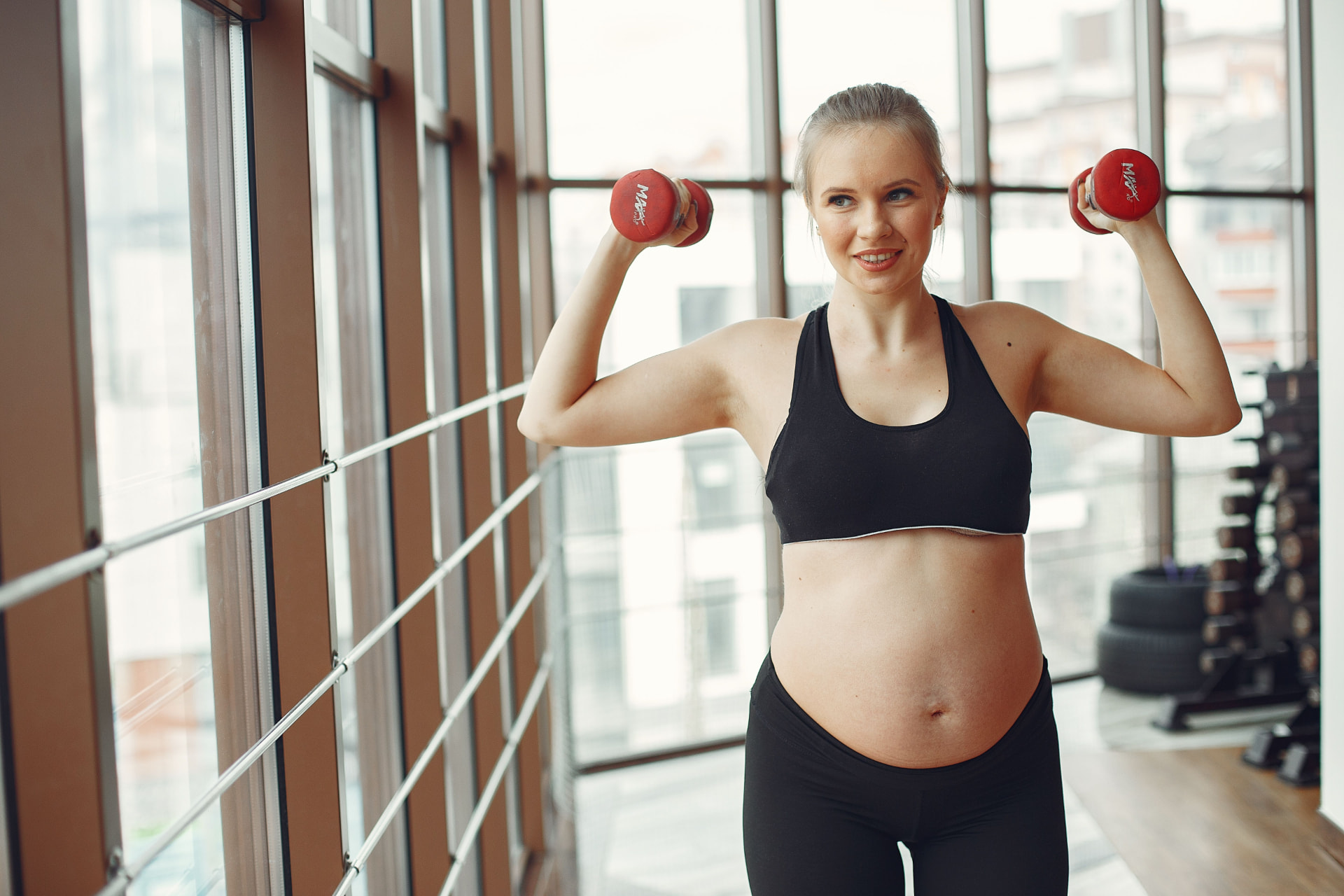
In 1985, the American College of Obstetricians and Gynecologists (ACOG) published its first guidelines on exercise in pregnancy. Pregnant women were told to keep their heart rate under 140 beats per minute and limit strenuous exercise to 15 minutes at a time.i That's fine for a brisk walk, but it rules out running or a spin class, even for women who did them comfortably before pregnancy.
The limits weren't based on much evidence. At the time, doctors worried that exercise would divert blood away from the womb to the mother's muscles, leaving the baby short of oxygen, and that overheating could harm the baby's development.iiiii Research since then has shown that moderate exercise doesn't reduce blood flow to the baby.iv
In 1994, ACOG dropped the heart rate and time limits,i and by 2002 it was encouraging 30 minutes or more of moderate exercise on most days.v Confusingly, ACOG's latest guidance, from 2020, brings a heart rate figure back: a table of exercise advice suggests usually not going above 140 beats per minute, alongside how hard the exercise feels. Experts have since pointed out that nobody knows where the 140 beats per minute figure came from, and that a single heart rate cap isn't a useful limit in pregnancy, when resting heart rate naturally rises.vi ACOG itself says how hard exercise feels may be a better guide than heart rate.vii
Working out for two
We now know that exercise in pregnancy is good for both mother and baby. In clinical trials, regular exercise lowered the odds of gestational diabetes by 38% and preeclampsia by 41%.viii Both conditions can affect how a baby grows. Exercise also lowered the odds of a very large baby (over 4 kg, or about 8 lb 13 oz) by 39%, without raising the chance of a premature or small baby.ix In Dublin, Professor Fionnuala McAuliffe, one of Maternitec's clinical advisors, led the PEARS trial, which gave pregnant women with a raised BMI diet and exercise advice backed by a smartphone app.x Women in the program ate better, were more active and felt more motivated to exercise.xi
What about elite athletes?
Researchers have also assessed how intense exercise impacts the babies of elite athletes. In a study of six Olympic-level endurance athletes running on a treadmill, their babies were unaffected while their mothers stayed below 90% of their maximum heart rate. At higher heart rates, blood flow to the womb sometimes fell by more than half and the baby's heart rate slowed, recovering quickly once the mother stopped.xii All the babies were born with normal weights.
Another study put 60 elite and recreational athletes through high-intensity interval training in the second and third trimesters. There were six longer episodes of the baby's heart rate slowing, all while running, and all back to normal within 8 minutes. The researchers concluded that this kind of intense training is tolerable for highly active women.xiii ACOG agrees that people who already do vigorous exercise can usually carry on, and should talk to their healthcare provider about how and when to adjust.vii
Cardio or weights?
Some interesting recent research has come from Dr. Linda May's group at East Carolina University. They have randomly assigned pregnant women to supervised aerobic exercise (treadmills, bikes and ellipticals), resistance exercise (weights), a mix of the two, or a stretching class, usually from early in the second trimester.
Aerobic exercise seems to benefit the baby's heart and motor development. Late in pregnancy, the babies' hearts pumped more blood with each beat than those of babies whose moms did a stretching class,xiv and at one month old they had better motor skills than babies whose moms didn't follow an exercise program.xv
Resistance exercise had a surprising effect on the babies' metabolism. At one month old, babies whose moms had lifted weights burned over 35% more energy at rest than babies whose moms had done aerobic exercise or none.xvi And across all types of exercise, the more women exercised in total, the lower their babies' share of body fat at one month.xvii Both findings hint that exercise in pregnancy could help children grow up at a healthy weight. The babies haven't been followed long enough to know for sure, but longer studies are underway.
Combining exercise types also brings benefits. Several of the trials showing lower rates of gestational diabetes used a mix of cardio and strength, and a 2023 review of 18 trials found that all types of exercise were equally effective at preventing it.xviii No single type of exercise has yet been shown to be best overall, but a mix fits the World Health Organization's advice to include both aerobic and muscle-strengthening activity in pregnancy.xix
Healthy mom, healthy baby
Knowing exercise is good for you might not make it any easier to get moving when you're tired, nauseous or juggling everything else. It doesn't have to be a big commitment, though. Walking, swimming, yoga and dancing all count, and if you weren't active before pregnancy, you can build up gradually. And the benefits aren't only physical: in clinical trials, women who exercised during pregnancy had two-thirds lower odds of becoming depressed while pregnant.xx
Most guidelines suggest working up to about 150 minutes of moderate activity a week.viixix If you're new to exercise or have any complications, have a chat with your midwife or doctor first.
© 2026 Maternitec Ltd. You're welcome to share a link to this article. Please don't reproduce it without permission.
References
- i.Smith KM, Campbell CG. Physical activity during pregnancy: impact of applying different physical activity guidelines. J Pregnancy. 2013;2013:165617. doi:10.1155/2013/165617
- ii.Wolfe LA, Hall P, Webb KA, Goodman L, Monga M, McGrath MJ. Prescription of aerobic exercise during pregnancy. Sports Med. 1989;8(5):273–301. doi:10.2165/00007256-198908050-00003
- iii.Clapp JF 3rd. Morphometric and neurodevelopmental outcome at age five years of the offspring of women who continued to exercise regularly throughout pregnancy. J Pediatr. 1996;129(6):856–63.
- iv.Skow RJ, Davenport MH, Mottola MF, et al. Effects of prenatal exercise on fetal heart rate, umbilical and uterine blood flow: a systematic review and meta-analysis. Br J Sports Med. 2019;53:124–33. doi:10.1136/bjsports-2018-099822
- v.Entin PL, Munhall KM. Recommendations regarding exercise during pregnancy made by private/small group practice obstetricians in the USA. J Sports Sci Med. 2006;5:449–58.
- vi.Evenson KR, Hesketh KR. Monitoring physical activity intensity during pregnancy. Am J Lifestyle Med. 2023;17(1):18–31. doi:10.1177/15598276211052277
- vii.American College of Obstetricians and Gynecologists. Physical activity and exercise during pregnancy and the postpartum period. ACOG Committee Opinion No. 804. Obstet Gynecol. 2020;135(4):e178–88. doi:10.1097/AOG.0000000000003772
- viii.Davenport MH, Ruchat SM, Poitras VJ, et al. Prenatal exercise for the prevention of gestational diabetes mellitus and hypertensive disorders of pregnancy: a systematic review and meta-analysis. Br J Sports Med. 2018;52(21):1367–75. doi:10.1136/bjsports-2018-099355
- ix.Davenport MH, Meah VL, Ruchat SM, et al. Impact of prenatal exercise on neonatal and childhood outcomes: a systematic review and meta-analysis. Br J Sports Med. 2018;52(21):1386–96. doi:10.1136/bjsports-2018-099836
- x.Kennelly MA, Ainscough K, Lindsay KL, et al. Pregnancy exercise and nutrition with smartphone application support: a randomized controlled trial. Obstet Gynecol. 2018;131(5):818–26. doi:10.1097/AOG.0000000000002582
- xi.Ainscough KM, O'Brien EC, Lindsay KL, et al. Nutrition, behavior change and physical activity outcomes from the PEARS RCT - an mHealth-supported, lifestyle intervention among pregnant women with overweight and obesity. Front Endocrinol (Lausanne). 2020;10:938. doi:10.3389/fendo.2019.00938
- xii.Salvesen KÅ, Hem E, Sundgot-Borgen J. Fetal wellbeing may be compromised during strenuous exercise among pregnant elite athletes. Br J Sports Med. 2012;46(4):279–83. doi:10.1136/bjsm.2010.080259
- xiii.Dalhaug EM, Sanda B, Bø K, Brown WJ, Øvstedal K, Brevik-Persson S, Haakstad LAH. Is fetal well-being jeopardised during high-intensity interval training? BMJ Open Sport Exerc Med. 2025;11(2):e002496. doi:10.1136/bmjsem-2025-002496
- xiv.May LE, McDonald S, Forbes L, et al. Influence of maternal aerobic exercise during pregnancy on fetal cardiac function and outflow. Am J Obstet Gynecol MFM. 2020;2:100095. doi:10.1016/j.ajogmf.2020.100095
- xv.McMillan AG, May LE, Gaines GG, Isler C, Kuehn D. Effects of aerobic exercise during pregnancy on 1-month infant neuromotor skills. Med Sci Sports Exerc. 2019;51(8):1671–6. doi:10.1249/MSS.0000000000001958
- xvi.Jevtovic F, Claiborne A, DeVente JE, Mouro S, Houmard JA, Broskey NT, May LE. Maternal resistance exercise increases infant energy expenditure. Am J Physiol Endocrinol Metab. 2025;328(3):E354–61. doi:10.1152/ajpendo.00414.2024
- xvii.Claiborne A, Jevtovic F, Zheng D, et al. Exercise during pregnancy modulates infant cellular and whole-body adiposity. Physiol Rep. 2024;12:e70145. doi:10.14814/phy2.70145
- xviii.Paulsen CP, Bandak E, Edemann-Callesen H, Juhl CB, Händel MN. The effects of exercise during pregnancy on gestational diabetes mellitus, preeclampsia, and spontaneous abortion among healthy women - a systematic review and meta-analysis. Int J Environ Res Public Health. 2023;20(12):6069. doi:10.3390/ijerph20126069
- xix.Bull FC, et al. World Health Organization 2020 guidelines on physical activity and sedentary behaviour. Br J Sports Med. 2020;54(24):1451–62. doi:10.1136/bjsports-2020-102955
- xx.Davenport MH, McCurdy AP, Mottola MF, et al. Impact of prenatal exercise on both prenatal and postnatal anxiety and depressive symptoms: a systematic review and meta-analysis. Br J Sports Med. 2018;52(21):1376–85. doi:10.1136/bjsports-2018-099697